

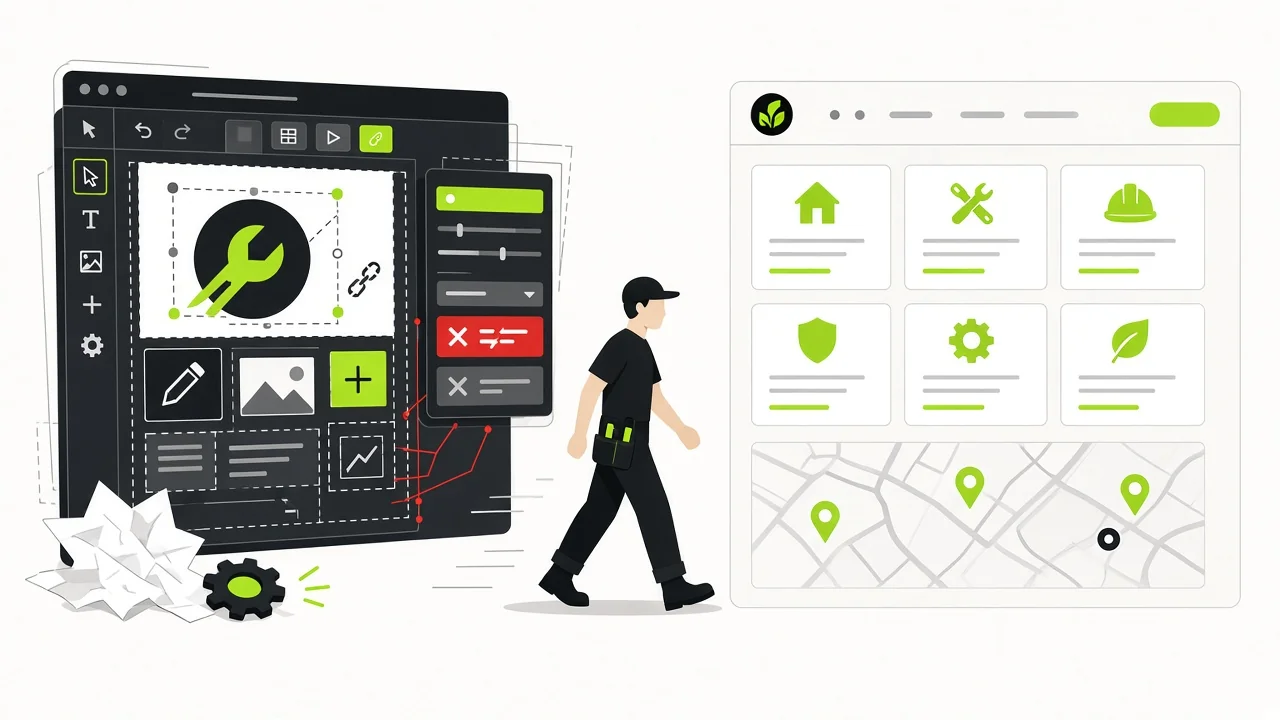
Wix or Squarespace vs hiring a web designer? For most Perth small businesses that want new customers from Google, hiring someone and moving off the DIY builder is the better call once the site needs to look polished and rank for real services. DIY builders are fine when you are not trying to scale. When you need custom features, clean service pages and steady support, a professional WordPress site is usually the smarter spend.
I am Muhammad Awais from Affordable Website Design Perth. Far fewer clients come to us from Wix or Squarespace than from WordPress and Shopify. Wix and Squarespace are beginner friendly. The sites usually do not look polished. When you need a polished site with good SEO, you need to move away.
What Wix and Squarespace get right
I am not anti-DIY. These builders make it easy to publish something quickly. If you can drag blocks around and ship a brochure site in a weekend, that is useful.
They also suit owners who already have enough work. If the site is decent, the phone is busy from referrals, and you are not looking to scale or win new recurring clients from search, staying on Wix or Squarespace is reasonable. You do not need a redesign for the sake of it.
The problems show up when the business wants growth. Polished design, clear user journeys, custom booking flows and SEO-ready service pages are where DIY platforms start to fall short.
Where DIY platforms hit the ceiling
Functionality is limited and you hit the ceiling quickly. Custom features like a custom flow or a custom booking system are where these platforms fall down.
Squarespace only lets you use pre-built templates and pre-built sections. You cannot build your own the way you can on a proper WordPress build. Squarespace itself is clear that code-based customisations sit outside official support, and it cannot guarantee those mods will keep working with its design system or on mobile. That is fine for a simple brochure. It is a hard stop when your business needs a custom path that the template never planned for.
Wix has a similar pattern: easy to start, awkward when you outgrow the defaults. The builder can feel busy. Owners spend nights moving boxes around instead of quoting jobs.
If the goal is ranking for services people actually search, Google's own SEO starter guide talks about organising a site in a logical way, writing content that is unique to the page, and using titles that accurately describe what that page offers. One dumped "Services" page with every trade job listed underneath does not give Google or a customer a clear page for each search.
The DIY problems I see over and over
When DIY sites come across my desk, the same issues keep showing up:
- Unpolished layouts that look unprofessional
- Logos made huge because the builder makes resizing feel like the main job
- Broken forms that never deliver the enquiry
- All services stuffed onto one page
- A confusing sitemap with no clear calls to action, no user journey, or too many competing calls to action
The one-page services dump hurts SEO hardest. You need individual service pages for specific keywords so people can find those pages. "Emergency plumber Perth" and "hot water system replacement" should not fight for attention on the same thin URL.
Another Wix-specific trap: Wix sometimes ties clients into Google Workspace billed through Wix, so they cannot easily move away. Wix's own Google Workspace FAQs say Workspace renews through the Wix account, and transferring the business email from Wix to Google means contacting Wix Customer Care. That is doable, but it is another ball and chain when you already want to leave the website builder.
Ownership and exit paths matter. If you are unsure what you control today, read who owns my website. Fix that before you argue about templates.
A Perth painter who outgrew DIY and AI
A Perth painter had a DIY website made with AI. He could not create sub-service pages, and he did not know what benefit service pages bring with keywords.
We recommended a rebuild with individual service pages and location pages targeting searches like "painter Canning Vale" and "painter Mosman Park". That is the structure search needs: one clear page for one clear intent, not a single homepage hoping Google guesses the rest.
Tradies run into this a lot. If you are still deciding whether a Google profile alone is enough, see do tradies need a website. The short version is you need both a site with service pages and a Google Business Profile.
When I tell people to stay on Wix or Squarespace
Stay DIY when:
- The site is already decent
- You are not looking to scale
- You already have enough work and are not chasing new business from the site
In that case, leave it alone. A quiet redesign project will not pay for itself if the diary is full and the site is only there so people can confirm you exist.
Move when:
- You want to scale and win new recurring clients
- You do not want to rely on outreach or referrals alone
- You need custom features the builder will not give you
- The site looks rough, forms break, or every service sits on one page
My one-line rule is simple: if your website is not bringing you customers, just pay someone to do a website for you.
Cost: your time vs a managed site
Owners often think DIY is cheaper because there is no designer invoice. The time spent trying to fix their own site, often without knowing how, usually costs more than they would pay us.
We look after the site as a company. We make sure everything works, test forms regularly, help with online presence, and give guidance on improving the site. That support is missing when you manage the builder yourself at midnight after jobs.
Builder subscriptions can be expensive on their own. We host on WordPress with some support from $100 a month, which is good value, and they have someone to call when something goes wrong. Details sit on website hosting and website maintenance.
They also do not have to hunt for unreliable freelancers on Upwork or Fiverr to fix things. That hunt wastes time. One person who knows the site, tests the form, and can answer the phone when something breaks is calmer than a string of gig-economy patches.
Build packages and care options are on the pricing page. If SEO is part of the move off DIY, SEO services cover the ongoing search work once the page structure is right.
What a professional rebuild usually includes
When we pull a business off Wix or Squarespace, the job is not "make it prettier in the same box." It is:
- A clean structure with home, about, contact and clear service pages
- Individual pages for the services people search
- Location pages where suburb searches matter
- Working forms that get tested
- Hosting and support so you are not the emergency webmaster
- Guidance on calls to action so the page has one clear next step
That is the opposite of a cluttered DIY canvas with a giant logo, a broken form and six buttons fighting each other.
The goal is a site someone can find for a specific job in a specific suburb, then enquire without guessing which button to press. Pretty templates help only when the structure and the enquiry path work.
So, Wix vs hiring a web designer in Australia?
DIY builders win on speed and simplicity for a basic presence. A web designer wins when the site has to look polished, support custom features, and bring customers through search.
Choose DIY if the current site is fine and growth is not the goal. Choose a designer when you want recurring clients from Google, need pages the template cannot handle, or are tired of fixing the site yourself.
Platform pages if you want to stay on a builder for now: Wix, Squarespace, or move to WordPress when the template ceiling is the problem. Product businesses comparing store platforms can also look at Shopify.
If you are stuck on Wix or Squarespace in Perth and the site is not earning its keep, get in touch with what you sell and what the builder will not let you do. I will tell you straight whether to stay put, tidy what you have, or rebuild on WordPress with hosting and support from $100 a month.