

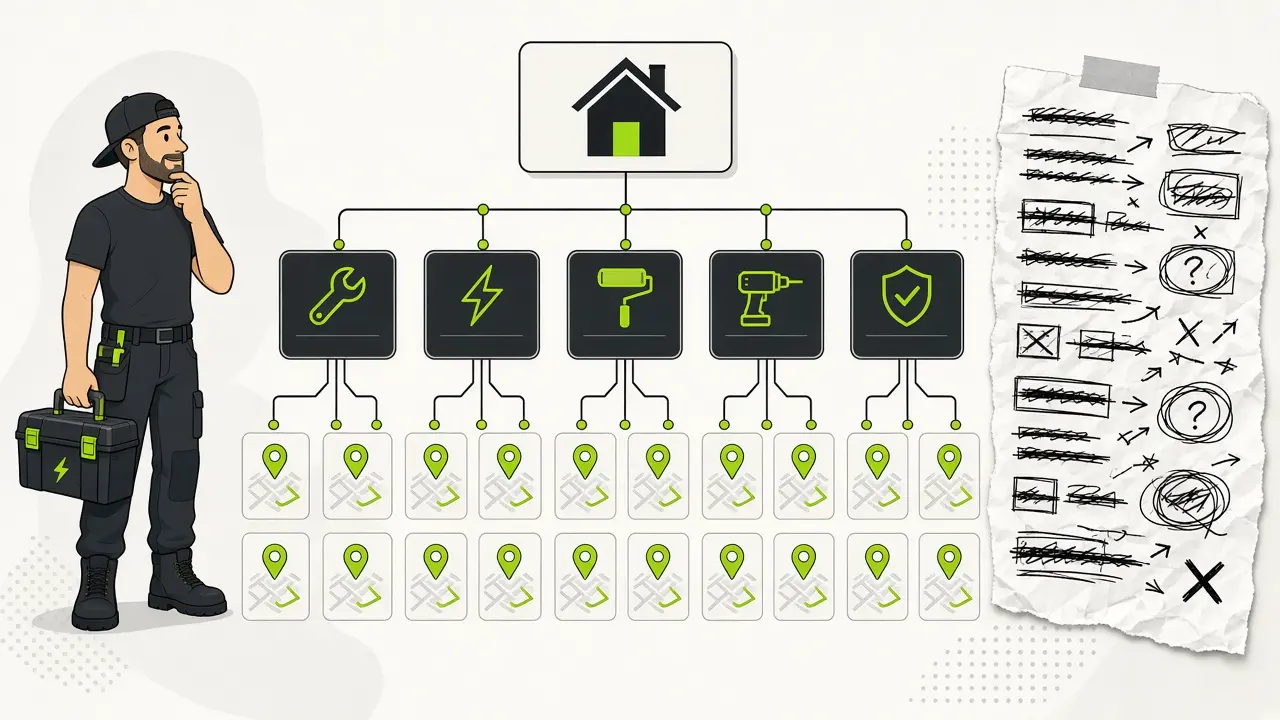
How many pages should a small business website have? For a Perth tradie I build a full sitemap: a page for every service, plus a location page for every service and suburb combo. Ten services across four suburbs means forty location pages. That is not padding. It matches how people search for a trade and a suburb, and it is the structure I use when the goal is steady Google enquiries rather than a thin brochure.
I am Muhammad Awais from Affordable Website Design Perth. Below is how I plan those pages, a real site I built for a mate, how I keep location pages from turning into near-duplicates, and what this costs compared with a standard build.
The sitemap I actually build
Top level pages still matter: home, about, contact, and a clear services hub. Then each service gets its own page. Then each service gets a location page for each suburb you want to win.
The maths is simple. Ten services times four suburbs equals forty location pages. Add the service pages and the core pages and you have a real site, not a five-page placeholder. Websites need that volume of clear content if you want them to scale with search.
Someone looking for a hot water plumber in one suburb and a blocked drain plumber in another is not converting from the same thin URL. Separate pages give each search a place to land.
If you are still on a Google profile alone, read do tradies need a website. The short version is you need both the profile and a site with service pages. For timing once the sitemap is live, see how long does SEO take.
Real example: Smart Door Lock
Smart Door Lock was built for a mate with pages for all the services they offer, plus location pages. Same strategy: service pages first, then service-and-suburb pages instead of one brochure homepage hoping Google guesses the rest.
Leads were people wanting new or replacement locks. They came in via WhatsApp messages. There were 3 leads in the 3rd month, which is great for that stage of a new site. That matches the pattern I describe elsewhere: early movement around the three-month mark when the structure is right and the work is consistent.
The opposing view, stated fairly
Not every agency builds service-times-suburb pages from day one. Growth Foundry's guide on how many location pages a service-area business should have argues most small service-area businesses should begin with three to five strong location pages, not dozens, and expand only when demand, evidence and content depth justify another URL. It also warns against multiplying every service by every city at the start if that produces overlapping content you cannot maintain.
That view is worth reading. My practice for Perth tradies still starts with the fuller sitemap when the owner wants coverage across named suburbs and can support unique copy on each page. Thin city pages are the problem. Proper location pages are not.
Doorway pages vs unique location pages
Agencies that skip location pages are leaving traffic on the table. Write unique content for every page, because these pages really help.
Google's spam policies describe doorway abuse as sites or pages created to rank for specific, similar queries that lead users to intermediate pages that are not as useful as the final destination. Examples include multiple pages targeted at regions or cities that funnel users to one page, and substantially similar pages that are closer to search results than a clear, browseable hierarchy.
Location pages are not automatic doorway pages. Near-identical suburb clones are the risk. The fix is uniqueness, not deleting every suburb URL.
How I keep location pages unique
General best practice for avoiding near-duplicates, without claiming a magic ranking result:
- Unique intro per suburb and nearby areas served
- Service description written for that suburb
- Unique FAQs
- Different internal links to nearby suburbs and related services
- Unique meta title and description
- Real local detail like jobs done in the area where available
Shared facts about the business will repeat. That is normal. The page earns its place when the suburb changes the intro, the FAQs, the internal links and the local proof. Swapping the suburb name in one paragraph and publishing forty copies is the pattern Google's doorway section is aimed at.
Sitemap mistakes I see most often
When a tradie site comes across my desk, these three mistakes show up constantly:
- One page listing all services
- All suburbs listed together on one page
- No proper website structure
The all-services dump hurts hardest. "Emergency electrician" and "EV charger install" should not fight for attention on the same thin URL. The suburb dump has the same problem: a footer list of areas is not the same as a page written for that suburb and that job.
No proper structure means visitors bounce between a busy homepage and a contact form with nothing in between that matches the search they typed. If the site is live but quiet, work through website not getting enquiries before you blame the trade.
What this costs
A standard site starts from $1,500. A large full site with all service and location pages starts from $3,000 to $5,000. Starter websites start from $500. Ecommerce starts from $2,000.
The jump from a standard build to the large sitemap is mostly page count and copy, not a fancier homepage. You are paying for the service pages and the service-and-suburb pages that match how people search. Full package detail is on pricing. Ongoing search work after the structure exists sits under SEO services.
If you only need a few priority suburbs live first, we can stage the rollout. The end state I aim for is still one clear page per service and per service-and-suburb combo you care about.
How I decide the first batch of suburbs
I do not invent suburbs the business never works. Start with areas you already quote in, then the next ring you want to win. For each suburb, ask:
- Do you take jobs there?
- Do people search that suburb with your trade?
- Can you write something useful that is not a copy-paste of the last suburb?
If the answer is no on local substance, hold the page until you can write it properly. Publishing empty shells is how location pages earn a bad name.
Pair the site with a clean Google Business Profile for the Map Pack. Profile setup and care sit under Google Business Profile. The website carries the service and suburb searches the profile cannot hold on its own.
Browse how we already split Perth coverage on our own location pages if you want a sense of suburb-level structure in practice.
Service pages first, then multiply
I still build the main service pages before I multiply them by suburb. Each service page explains the job in plain language: what you do, who it suits, what to prepare, and how to enquire. The location page then takes that service and writes it for one suburb, with local intro, local FAQs and links to nearby areas.
That order stops you from creating forty empty shells with nowhere useful for the internal links to point. The service page is the parent. The suburb page is the local landing point. Both need to be real pages, not thin redirects.
If a trade only offers three core services but covers eight suburbs, start with the three service pages, then the service-and-suburb set for the suburbs that already send quotes. Add the outer suburbs when you are ready to write them properly.
Putting the page count in plain English
So, how many pages does a tradie website need? Enough for every service you sell and every suburb you want to rank for, with unique content on each URL. For many Perth trades that means dozens of pages once you multiply services by suburbs, not a five-page brochure.
Skip the one-page services dump. Skip the suburb list stuffed into a single paragraph. Build the sitemap, write each page properly, and give Google and the customer a clear place to land.
Other agencies will tell you to stay small. I tell Perth tradies to stay honest and build the pages that match the searches they want. Unique copy is the line between a useful local page and a doorway-style clone.
If you want that structure scoped for your trade and suburbs, contact us with the services you offer and the areas you cover. I will map the page list, give you a quote (standard sites start from $1,500, full sites with every service and location page start from $3,000-$5,000), and tell you which suburbs should go live first.